What we talk about when we talk about writing

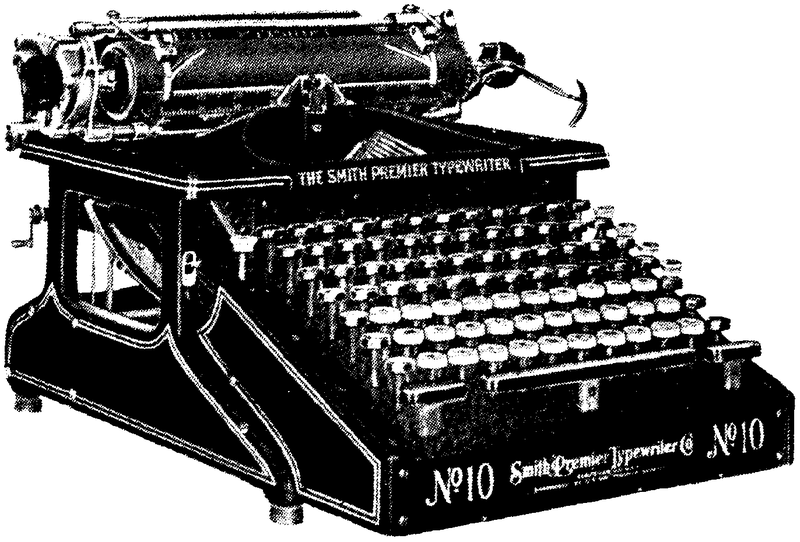
Raymond_CarverThe peerless short story writer Raymond Carver wrote an essay called ‘On Writing’ which is worth anyone’s while to study I would say, especially if that someone is a writer themselves.

It’s a piece I go back to now and again and enjoy reading over – even though there are parts of it I disagree with.

If you’d like to read it you can find it in Fires, a collection of Carver bits and bobs, along with some of his other essays, stories and poems – it’s also available online here.

‘On Writing’ is essentially a Carver manifesto, dealing with what he thinks makes a good writer.

He tells us: “Ambition and a little luck are good things for a writer to have going for him. Too much ambition and bad luck, or no luck at all, can be killing. There has to be talent.”

But talent on its own, he says, is not enough – in fact, he’s never met a writer who didn’t have talent. What picks out the best from the rest is a way of looking at the world, and describing it, which is different from everyone else’s way. Every good writer makes the world over to their own specifications.

“It is the writer’s particular and unmistakable signature on every­thing he writes. It is his world and no other. This is one of the things that distinguishes one writer from another. Not talent. There’s plenty of that around. But a writer who has some special way of looking at things and who gives artistic expression to that way of looking: that writer may be around for a time.”

51n7gmbPbEL__SY300_The essay also includes a bon mot which Carver picked up from the writer Isak Dinesen which he likes so much he say’s he’s going to write it on a card and pin it to the wall above his desk. Dinesen said that she “wrote a little every day, without hope and without despair.”

I like that too – ‘without hope and without despair.’

There’s plenty more in there to cherish – but now to the bit in the essay I can’t quite go along with – Carver’s dislike of ‘tricks’ in writing.

He says: “No tricks.” Period. I hate tricks. At the first sign of a trick or a gimmick in a piece of fiction, a cheap trick or even an elaborate trick, I tend to look for cover. Tricks are ultimately boring, and I get bored easily, which may go along with my not having much of an attention span. But extremely clever chi-chi writing, or just plain tomfoolery writing, puts me to sleep.”

It’s easy to be seduced by the way Carver writes – but I can’t go along with what he’s saying here. For many of us, short stories are the place where we try out ideas, do mad things – they are our space to be experimental, even if those experiments don’t always work.

Also, there’s the question of what constitutes a trick – Carver himself was prone to the odd literary device, and particularly to the ‘trick’ of leaving a vacuum in his stories so the reader was left to fill it with emotion. It was an astonishingly successful trick which worked at times like magic.

Hmm – so it’s like the president of the magic circle saying: ‘All these other magicians, they do tricks. Not me! I’d never stoop so low as to fool you with trickery.’

So I don’t agree with every word in there – but it’s still a remarkable manifesto. And it extols the virtues of working hard at your craft, taking pride in making each piece as good as it can be and finding precisely the right words in the right order. Who could disagree with that?

Last word to Carver of course – here he tells us how the short story writer should go about his or her task:

“He’ll bring his intelligence and literary skill to bear (his talent), his sense of proportion and sense of the fitness of things: of how things out there really are and how he sees those things – like no one else sees them. And this is done through the use of clear and specific language, language used so as to bring to life the details that will light up the story for the reader. For the details to be concrete and convey meaning, the language must be accurate and precisely given. The words can be so precise they may even sound flat, but they can still carry; if used right, they can hit all the notes.”

I can’t promise you no tricks at all – but, if you get a moment, take a look at my book Song of the Sea God. You can look inside to read the first few pages free and download a free Kindle sample for UK readers here. And for readers in the USA here.

Maria Malone – Author Profile

Today I’m delighted to welcome Maria Malone to my blog. Maria’s a very successful author who writes not only under her own name but also as a ghostwriter to lots of famous names such as Cheryl Cole and Tony Hadley. I’m really pleased she’s been able to join us to talk about her fascinating life and work.

Pachae on boatTell me a little bit about yourself as a person?

I’m from Whitley Bay, a seaside town a few miles north of Newcastle, and although I’ve moved around a lot I still consider my roots to be in the North East. The ice rink was on my doorstep when I was growing up and I was mad on skating – spins, axels, ice dancing, the lot! Now, not having an ice rink handy, I do a lot if walking and I’ve ditched the sequins … I still have my ice skates, though.

I’m a passionate reader. Both my parents loved to read and there were always books in the house. In terms of writing, a turning point came after leaving my job at Yorkshire TV to freelance as a producer. I was able to structure my time differently and started to write Weekdays at Nine, a novel set in telly. When it was shortlisted in a Little, Brown/Daily Mail competition to find a new blockbuster novelist it was a huge confidence boost. I can remember feeling crushed when I didn’t win but looking back I’m glad – it wasn’t good enough!

Tell me about your journey as a writer – how you started and how you have developed?

I always wanted to write, was one of those kids who scribbled away. I started as a trainee reporter on regional newspapers in Blyth, Northumberland, and then Bradford before moving into telly. I was in the newsroom at Yorkshire TV to start with. I’ve worked on all kinds of programmes, ranging from a special with Arthur C Clarke in Sri Lanka to a revival of the Channel 4 music show, The Tube.

For a couple of years I lived in Johannesburg where I finished writing Weekdays at Nine (see above!) and developed Wildtrack, a children’s reality show set in the South African bush, for CITV in the UK. I moved back to England via Virginia Beach and joined ITV in London, producing DVD features for drama and entertainment programmes, from Prime Suspect to Popstars and Ant and Dec’s Saturday Night Takeaway. I wrote books to tie in with shows, briefly edited the Hear’say fan club magazine, and was the writer attached to ITV’s Reborn in the USA series in 2003, which proved be the springboard for a fantastic ghostwriting opportunity. In 2004, I left ITV to focus on ghosting.

1000px08_cheryl-234x300I know one of your main areas of work has been ghostwriting books for big names like Cheryl Cole, Girls Aloud and Tony Hadley. Could you tell us about how that writing process works?

Ghostwriting means spending a lot of time with the person whose book it is – as much as they need in order to be able to tell their story exactly as they want to. The process varies depending on each person’s availability and involves being flexible and fitting in with whatever other commitments they may have. It may involve going on the road or spending time in a recording studio or rehearsal room – whatever it takes. It is someone else’s book and they have to come first, always.

Do you write fiction too? How would you describe your work in this area – its themes and the important things about it?

I’ve been writing fiction for a long time, have a couple of novels under my belt, and am busy on the first draft of another one at the moment. I write commercial women’s fiction/thrillers. That sounds a bit grand but it’s not since I’ve not been published! I like dark stuff, exploring what people are capable of and how they conceal their true selves; that sense of thinking you know someone and then something happens to make you question everything. I’m a huge fan of writers like Nicci French, Chelsea Cain, Elmore Leonard, Robert B. Parker. Anne Tyler is brilliant too. I recently read A Dark Redemption by Stav Sherez and was blown away. It’s now on the long-list for the 2013 Theakstons Old Peculiar Crime Novel of the Year Award.

Writing is vital to me and it’s the process more than the outcome that really matters. In the past I think I probably put too much emphasis on wanting to be published, seeing it as the be-all and end-all. I don’t feel like that any more. It’s the writing itself that drives me now.

FROG PRINCESSTell me about your current book – what is it about and what makes it a great read?

I collaborated with Angie Beasley on her book, The Frog Princess, and it was a joy to do. Basically, it’s an autobiographical story of a girl growing up in poverty in Grimsby destined to work in a local factory who makes her escape via the beauty pageant circuit.

For a shy girl who lacked confidence and was raised as a Jehovah’s Witness, becoming a beauty queen was a brave choice and one that flew in the face of Angie’s family and strict upbringing. No matter what life threw at her, she hung onto her determination to succeed. Hers is a heartfelt and inspiring story about having a dream and going for it, no matter how unlikely it may seem – something very many of us can relate to.

Where can I buy a copy of your book?

It’s available in paperback and on Kindle at Amazon here.

You can find Maria:

on her website here.

or follow her on Twitter here

‘How to write’ books

First I was young and now I am old and there was a time when I could not under any circumstances countenance the idea of reading a ‘How to write’ book.

My logic, such as it was, ran that this type of book merely distracted me from my already ordained path as a writer, my development was to be natural and organic, unsullied by protocol and not restrained by the bonds of convention.

Hmm yeah, well we all have those types of notions when we are young I suppose.

Now I’ve grown up a bit I tend to think it’s best to take good advice when you are offered it. I also think that good writers are made, not born, and that there are technical tricks which can help you improve what you already have.

But I still don’t read a great many of these types of books, though there are a great many available. Here’s why: If ever I’m asked by a writer for advice what to read – much in the same way as one race-day punter might ask another for a tip on the best horse in the third, I always suggest a novel.  Or a whole bunch of novels. They tend to suggest some to me too. What I don’t suggest is a how to write book.

Because it seems to me the best way to learn to write is to read a lot of good writing – particularly if it’s of the same genre in which you are hoping to excel. If you are a crime writer, read lots of good crime writing. It’s common sense isn’t it?

Having said that, I have read a few of these types of books and I can say that it’s rare you flick through one without finding at least a few nuggets of information, or useful practices, or tips or which can help you with your writing. Some of them are very good indeed I would say – at least I have found them to be so.

Here then are the three ‘how to write’ style books which have been most useful to me in my development as a writer so far. I say again though, these are no substitute for reading broadly and deeply from the wonderful and diverse library of fiction we have at our disposal.

51dvcZiLj5LHow Not to Write a Novel

by Sandra Newman and Howard Mittelmark

Funny this one – and also smart. The idea behind it is that explaining good writing is like herding cats, but it’s easier to spot bad writing. So this book goes through a whole host of howlers and draws your attention to them so you can not do them! I certainly spotted a number in here that I have been prone to as I‘ve developed – and it is a useful book to have around while you are rewriting as it makes you self-conscious about bad habits.

It covers flat characters, clichés, unconvincing plots and all the rest in it’s rundown of 200 mistakes.

517zPPD-z7LThe Master Class in Fiction Writing

by Adam Sexton

Tips from the top – a look at how some great writers write and what we could learn from them – so it’s my favoured principle of learning from what we read then, but  in a more ordered and considered form.

Authors covered in the book include Updike, Nabokov, Hemingway, Austin etc and their writing is used to support the argument throughout. Structurally, the book is split into chapters on areas like character, description, the world of the story and so on.

51Pti8zif-LA Novel in a Year

by Louise Doughty

I won this one as a prize. Not at a fair or anything. It was sent to me by the author when Song of the Sea God made her shortlist in the Daily Telegraph Novel in a Year competition. (My book was called The Longing in those days).

What I like about it is that it explains the writing process as it really is from the author’s point of view. So, rather than a rarefied classroom look at what you should do and in what order, it feels real and organic. I also found it matches very closely the way I do actually write a book – with plenty of freeform humming and hawing and writing of scraps at the front end and then planning and development and rewriting. So it feels very truthful – it’s not how you should do it, it’s how you will do it – it’s what works.

So those are my three. I’m sure you have your own favourites. If you know of any we really should be reading please add them in the comments section below so this becomes a resource for other people looking for tips on the best how to books to read!

Don’t forget if you get a moment to take a look at my book Song of the Sea God. You can look inside to read the first few pages free and download a free Kindle sample for UK readers here. And for readers in the USA here.

Liz Harris – Author Profile

I’m delighted to welcome to my blog the author Liz Harris to tell us about her life and work. Liz and I met recently at the Chip Lit Festival where we were both booked to read. The festival didn’t go quite as planned for us, for the full story on that see my post below, Day in the Life of a First Time Author, but I had a great day anyway thanks to her excellent company. And I’m very pleased she’s agreed to join us here today.

Tell me a little bit about yourself as a person?

001I was born in London. After getting a Law degree, I moved to California where I had a brilliant time doing a variety of jobs, from waitressing on Sunset Strip to working as secretary to the CEO of a large Japanese trading company.

I returned to the UK after six years, got a degree in English and taught up to A level for a number of years. For seven years of this time, I contributed weekly articles on education to a local newspaper.

In addition to my novels, three of which have already been published, and there’s a fourth coming out in September this year, I’ve written several short stories which have appeared in anthologies.

Wearing a slightly different hat, I’m the organiser of the Oxford Chapter of the RNA, a member of the Oxford Writers Group, and I’m a member of Historical Novel Society.

My hobbies include cryptic crosswords; frequent travel, particularly to Italy; reading books of every genre; cinema and theatre. I love the theatre and go to the London theatre every month.

Of course, the above tells you what I’ve done over the years, not what I’m like as a person. If you wanted something other than synonyms for ‘wonderful’, ‘giving’, ‘thoughtful’, you’d have to ask my family and friends, and I don’t think I’ll give you their names!

Tell me about your journey as a writer – how you started and how you have developed?

I loved writing essays and stories at school and at home, and I even enjoyed writing the essays for both of my degrees – I remember laughing out loud in the exam hall as I wrote an essay on Chaucer, I was having such a good time – but it never occurred to me to write a book. I thought that books just magically appeared, fully formed, without human intervention. If only!

My career choices changed over the years. First I wanted to be a farm hand, then a journalist, then a teacher, then a nun. The desire to be a nun lasted for ages as the memory of the virile, rugged Peter Finch as Dr. Fortunati in The Nun’s Story lingered long in my mind.

However, one night when my young sons were in bed – yes, I’d ditched my plan to become a nun – and my husband was out, I found myself irritated with the novel I was reading, felt my computer challenging me, and I suddenly pulled it towards me and started to type. At that moment, I found my vocation, and I’ve never looked back.

How would you describe your work – it‘s themes and the important things about it?

The Road Back was my first published novel. It takes place in the 1950s and 1995, and is set in London and in Ladakh, west of Tibet. I also have two other lighter novels, both set in Umbria and both published. The novel of the same genre as The Road Back, A Bargain Struck, set in Wyoming 1887, will be published this coming September.

My novels span two genres – historicals and rom com – but they all have to some degree themes in common; namely, appearance and reality, and the power of manipulation by words. I’m interested also in the effects of guilt on a person, and this comes out in my writing.

As a keen theatre-goer, I’m used to seeing actors adopt a disguise as a form of concealment, and I’m drawn to the dramatic possibilities of an ostensibly attractive exterior concealing a ‘worm i’ the bud’. And as a writer, it’s not surprising that I’m fascinated by the way in which one person can manipulate another, making that person think that the idea they decided upon had originated with them.

Tell me about your current book – what is it about and what makes it a great read?

TRB_revised[1]The Road Back has been described as ‘a sumptuous tale of love and adventure in the sweeping and little-known backdrop of Ladakh, north of the Himalayas … which throws together two people from radically different cultures with explosive results.’

Until fairly recently, however, I’d never heard of Ladakh. Three years ago, my cousin, who lives in Australia, asked me to help her to find a home for an album complied by her father, my late uncle, after his visit to Ladakh in the mid 1940s.

My uncle had been stationed with the army in North India, and he’d managed to get a one of the few authorised passes to visit Ladakh. On his return, he compiled the photos and notes that he’d made.

I found a home for the album in The Indian Room of the British Library, on Euston Road, and it was brought to England by friends of my cousin. I collected it from their hotel, and in the two weeks before I handed it over to the British Library, I read it from cover to cover. As I did so, I fell in love with Ladakh. From that moment, I began to research the country in depth.

At the very start, I knew that my heroine, Patricia, was born in the 50s and brought up in Belsize Park, a part of London I know well. I could see her – a lonely child, living with parents who’d been torn apart by grief over a tragedy that happened to the family in the past.

I didn’t know Kalden, though, beyond the fact that he was born and brought up in a Ladakhi village in the Buddhist part of the country.

I continued to read my resource books, which were teaching me about life in Ladakh, until one day, I read a very interesting fact about life in Ladakh. It was a Eureka moment. I felt a leap of excitement. What I read was …

Oh, dear! I seem to have gone on for long enough about the book; I’d better stop now. I’ll address the last part of your question and move on.

I love reading books with strong stories and characters who display the complexity of human behaviour, and I hope very much that I’ve captured real people in The Road Back, people whose story will make the reader want to keep on turning the pages to find out what happens next.

Where can I buy a copy of your book?

It’s on sale through Amazon here and is in some Waterstones stores, and in WH Smith’s at airports and railway stations.

Many thanks for interviewing me today, Chris. I’ve really enjoyed answering your questions.

You can link up with Liz here:

Twitter: @lizharrisauthor

Facebook: Liz Harris

Website: www.lizharrisauthor.com

Day in the Life of a first time author

Highclere_Castle
So, I was coming out of the Green Room for authors at the Chip Lit Festival – and there was Lord Julian Fellowes, renowned author of Downton Abbey fame.

He was surrounded by admirers, as is his right, and regaling them with a tale. As I approached I heard him say the line:

“But nobody could believe she had ignored the obsequies of a Duchess!”

It was clearly the punch line to some joke or anecdote, though one pitched at a frequency so high and wild that, to my ears, it might as well have been a dog whistle.

I chuckled for a while at having heard Julian Fellowes say such a Julian Fellowes like thing – what were the chances of that happening? But on reflection I think that he probably just talks like that all the time. He probably mentions Duchesses and obsequies about as often as I talk about telly or football.

top-logoIt was certainly a high point in what was a baffling morning. As for my reading at the festival – well, basically, it never happened. I turned up at the appointed time to find the café completely empty, except for the staff and for lovely Liz Harris who was the author due to appear after me. Basically the event hadn’t been included in the programme – so the publicity was limited to say the least. It was on the website and there was a poster on the café door – still, if the aim had been to keep it top secret so that nobody knew about it, then it was a roaring success.

DSC00997Liz and I sat and nursed coffees in the silent venue through my slot and hers – when finally one or two people did filter through the doors they had come not to hear us read or talk about writing – but just to get a cup of coffee. We know this because we asked them – well, Liz did. “No,” they said. “We’re not here for the authors – we’re here for some cake.”

So it would have been a disaster, except for the fact that Liz and I got on like a house on fire and had a good old chat. One of the things we talked about was other disastrous reading events we’d done in the past. Tellingly, this one was not the worst experience for either of us. And that’s a thought would be authors ought to mull over as they seek publication. It’s not all champagne launches and glittering prizes. No – it’s empty venues and lumping unsold books back to the car.

Market_Hall_and_the_Co-op_-_geograph_org_uk_-_236399After our non-reading at the café we wandered over to the author’s room at the theatre in Chipping Norton – which is a beautiful little town you should visit if you get chance. There we consumed brownies with other authors and agents and so on who were lovely and might well have been very important people, except that I’m too much of a rube to know. And after that I drove home through a spring day in the Cotswolds with scenery so idyllic it was like the Centre Parcs brochure for heaven.

So there we have it in a nutshell – a day in the life of a first time literary novelist. And, you know what, bizarre as it may seem, I quite enjoyed it.

Don’t forget if you get a moment to take a look at my book Song of the Sea God. You can look inside to read the first few pages free and download a free Kindle sample for UK readers here. And for readers in the USA here.

What we say vs how we say it

Which matters most then – what we say or how we say it?

I bet I can guess your reply. The first thought most of us will have is that, of course, what we say is most important – the message is always more important than the medium.

But we are readers of fiction, writers of fiction some of us too. Surely we are seduced by the beauty of words? If not, then why bother?

Winston_Churchill_cph_3b12010And anyway, isn’t everyone seduced by beauty? Aren’t we all stirred by eloquence? Otherwise why did Churchill slave over his wartime speeches? He could have had a civil servant bullet point the facts for him and read that out on the radiogram, without all the three-part lists and falling cadences.

Don’t bother saying:

“We shall fight on the beaches, we shall fight on the landing grounds, we shall fight in the fields and in the streets, we shall fight in the hills; we shall never surrender.”

Just say ‘We will fight wherever necessary,’ and leave it at that.

It was the poetry which mattered – in tough times, with little food and too much work and bombs raining down – it was the poetry which counted.

And why do advertising agencies exist? Surely a brisk summary of a product’s selling points would suffice?

170px-TrumanCapote1959Here’s something Truman Capote once said:

“To me, the greatest pleasure of writing is not what it’s about, but the inner music that words make.”

He was one of the most beautiful prose stylists in the language on his day old Truman. Not so much with In Cold Blood where he was trying to fit in, be liked, impress. Instead read his stories, and read Breakfast at Tiffany’s, his crystal clear paean to a beautiful boy, who he had to pretend was a beautiful girl – because of the times.

02p/43/arod/15356/P2774143One of Truman Capote’s childhood chums was Harper Lee, another wonderful writer, though by no means a poet. Her one novel was To Kill a Mockingbird. Well, I suppose, if you are only going to write one, you might as well make it a fantastic one.

It’s a curious book in some ways – more like two bundled together. One, a gentle rural remembrance, Cider with Rosie in the deep South, the other, a gritty courtroom drama about racial tensions and cultural upheaval. Both are brilliant.

That book staked Harper Lee’s claim as a great novelist, what she wasn’t, I don’t think, was a great prose stylist. Her writing was functional rather than beautiful, it was more about the message than the medium. And when her book came out, Truman, her old friend, couldn’t really understand what the fuss was about. Where was the poetry, the sublime music of the words – where was all that useless beauty?

But it was a book which meant a lot, still means a lot, to many, many people, including me. And yet, so, quite rightly, does Breakfast at Tiffany’s. So which wins – the medium or the message?

Which matters most, what we say or how we say it?

I’m calling it a dead heat.

Don’t forget if you get a moment to take a look at my book Song of the Sea God. You can look inside to read the first few pages free and download a free Kindle sample for UK readers here. And for readers in the USA here.

Words worth

How important are words? Very! Don’t ask me, don’t ask writers generally – ask marketers, brand managers – they will tell you how powerful a word can be.

Here’s an example, from history, which illustrates just how important what you call something can turn out to be. The place where I live, Gloucestershire in the UK, used to be apple country – they made cider in these parts and cultivated apples in a seemingly infinite variety. Every country lane you turn down still, to this day, has a cider orchard in it full of ancient trees, their bent backs held up with wooden props like little old men with walking sticks.

Red_AppleAmong the many varieties of locally cultivated apples, now sadly all consigned to the pantry of history, was one which was considered particularly tasty and useful – yet you will not find it on the shelves of Asda and Walmart. Why not? you may ask. Well – the name of this sumptuous fruit ladies and gentlemen was the Hen’s Turd.

Mouth watering it may have been but you won’t find it in a hopper next to the Golden Delicious in your local hypermarket. Because, essentially, what the Hen’s Turd had was a branding problem.

It had clearly been named after what it looked like in a ‘say what you see’ kind of way – but when Farmer Giles came up with this label he obviously hadn’t been thinking through the long-term marketing strategy. So, sadly, the Hen’s Turd resides in our fruit bowls no longer.

The truth is that the Hen’s Turd didn’t die out because of how it tasted, which was nice, it died out because of words. Which is why we’ve ended up eating the Golden Delicious, which tastes like wood shavings dipped in citric acid.

And that, my friends, is how important words can be. To read some more of mine, check out my book Song of the Sea God. You can look inside to read the first few pages free and download a free Kindle sample for UK readers here. And for readers in the USA here.